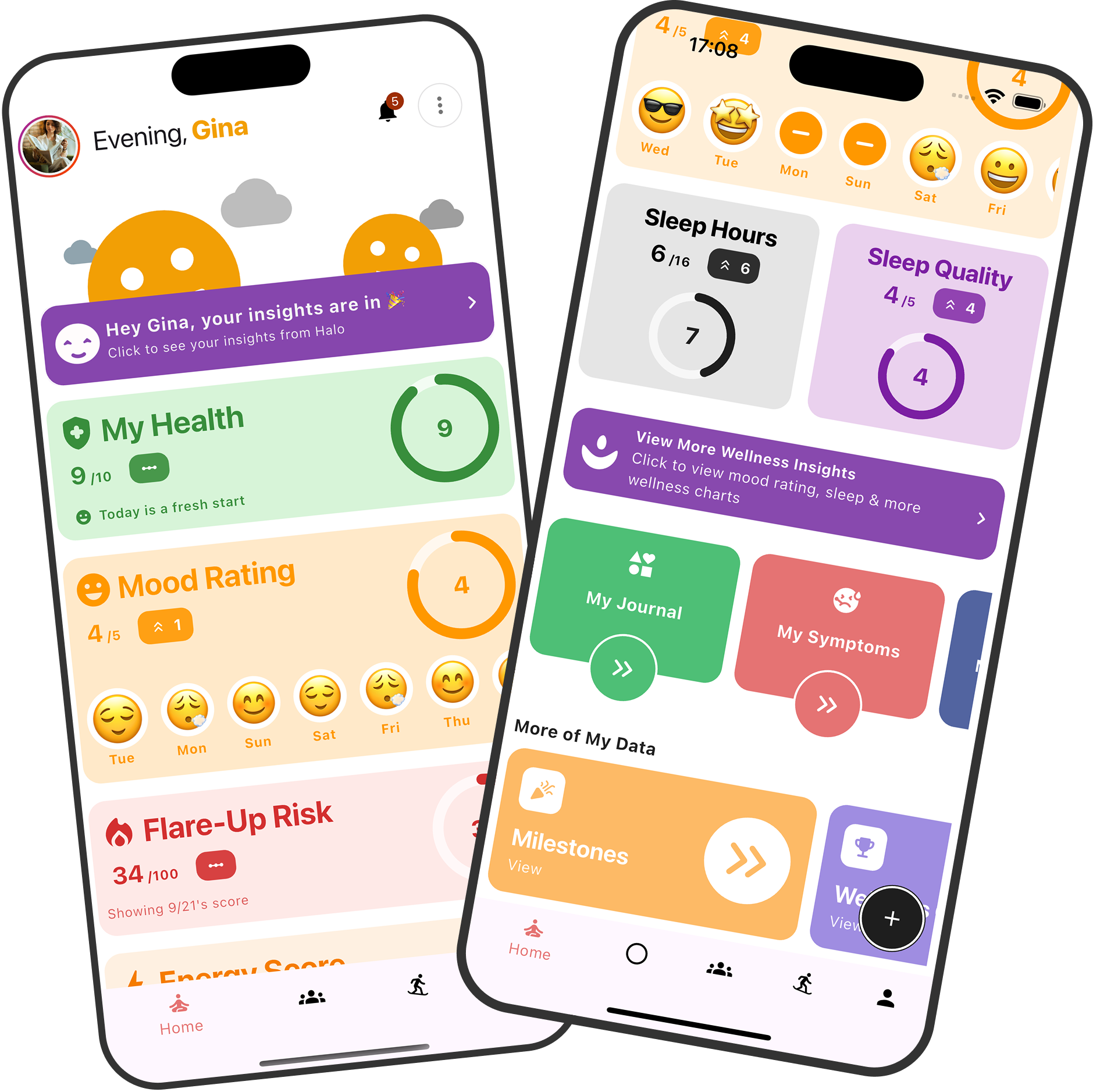
Tracking Ehlers-Danlos syndrome is easier when it takes seconds, so you can log pain, joint symptoms and fatigue by voice on a bad day. Follow our simple guide to how to track symptoms and medications so your history stays clear. Over time, AI wellness insights can show what tends to come before flares. Take a doctor summary to appointments, and see how Ehlers-Danlos syndrome fits into our pain & fatigue tracking guide.
One place for a many-sided condition
EDS can involve joints, skin, digestion, dizziness and fatigue all at once, and the pieces often get discussed in separate appointments. A single record puts them side by side.
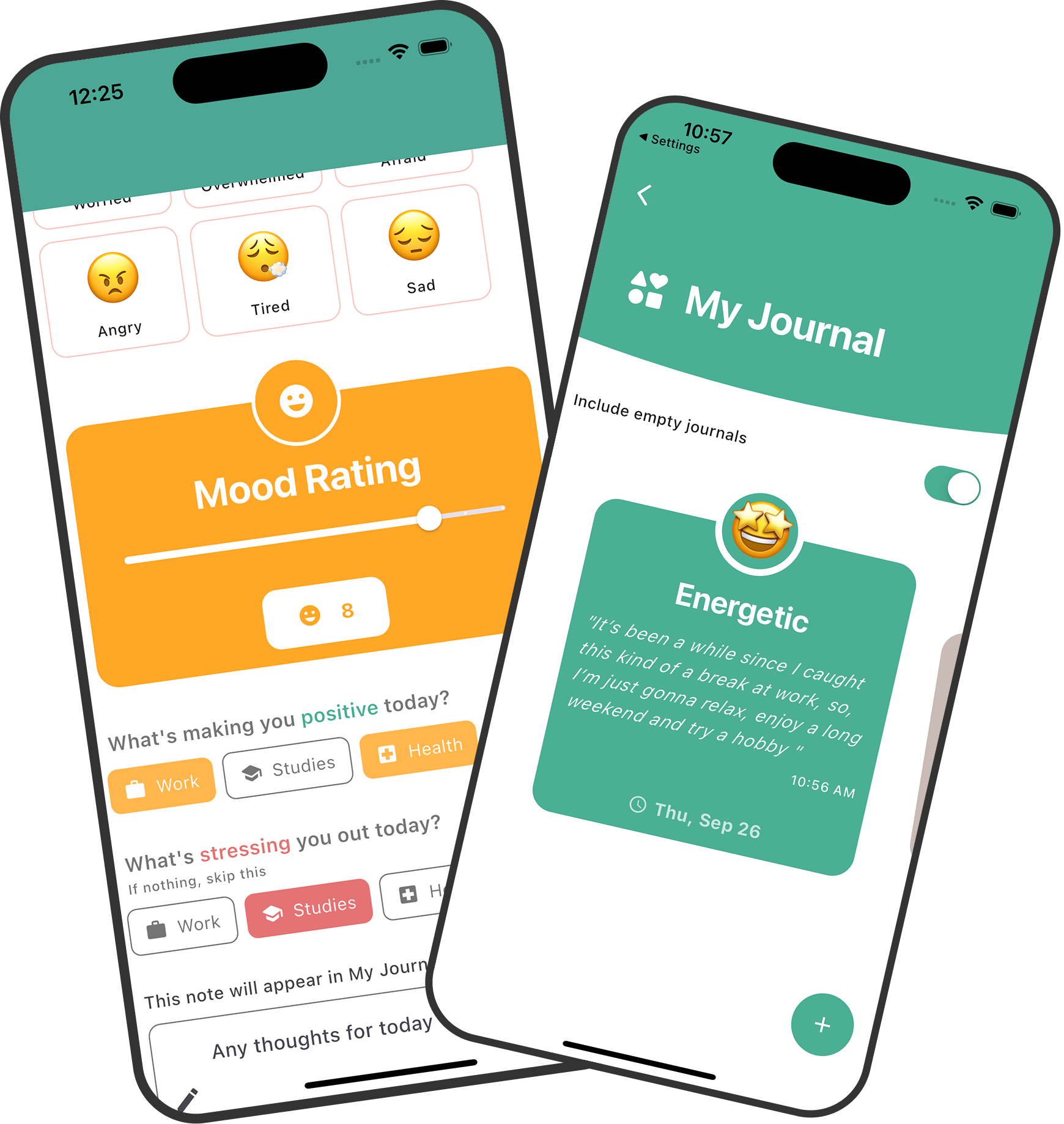
In Heylixir you log each symptom with intensity and a note, plus your meds, mood and journal.
Joint pain and subluxations with intensity and notes
Dizziness and heart-rate notes alongside
Log by voice when your hands hurt
See what sits behind your worst days
Overdoing it, poor sleep, heat, a flare or a missed dose can all be part of a rough day. Your logs make it easier to see which ones tend to repeat.
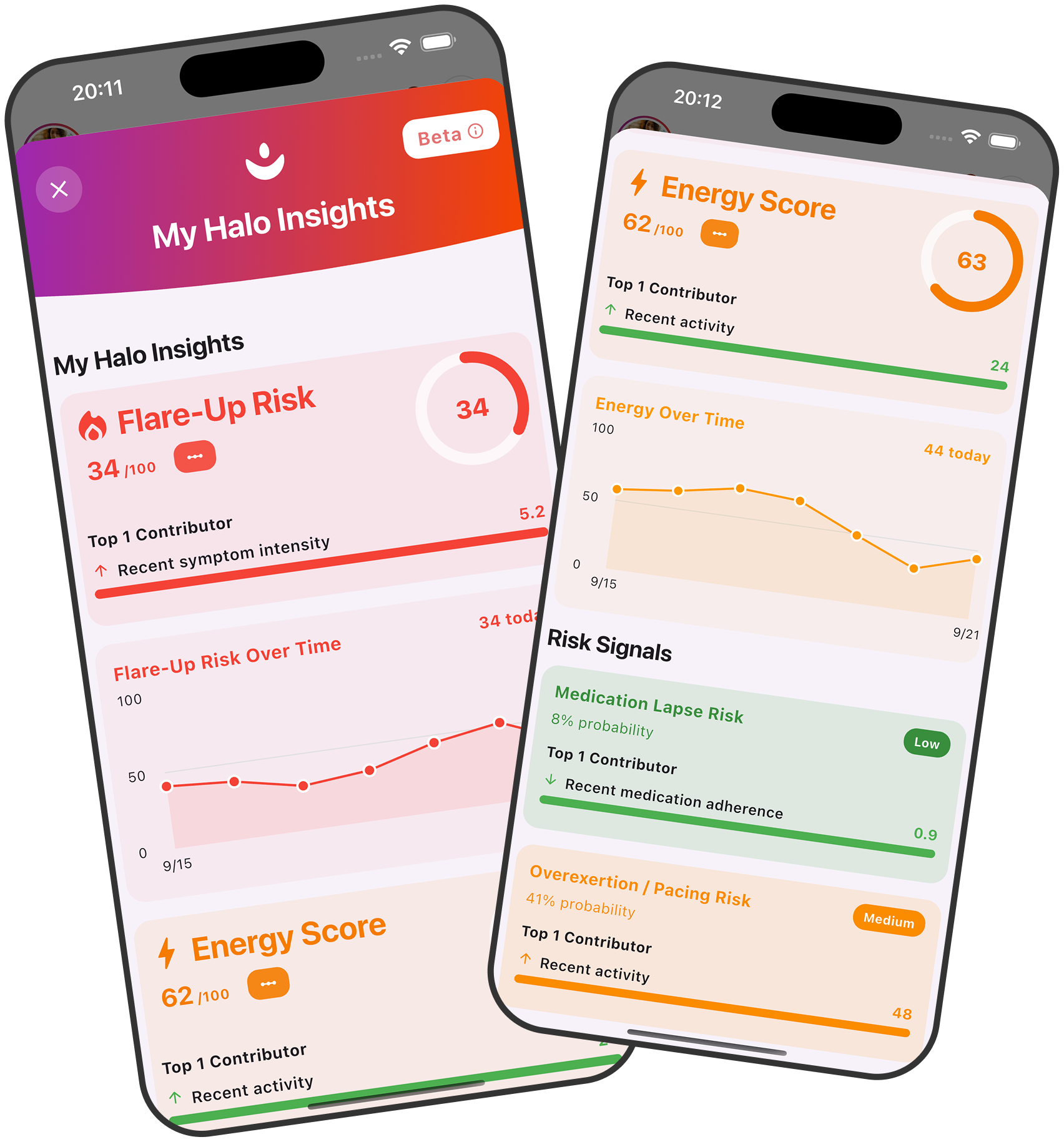
Halo AI points out patterns in your own logs in plain language, as a starting point for talking with your healthcare provider.
Activity and pain on one timeline
Sleep next to fatigue and pain
Patterns in plain language
Explain it with more than words
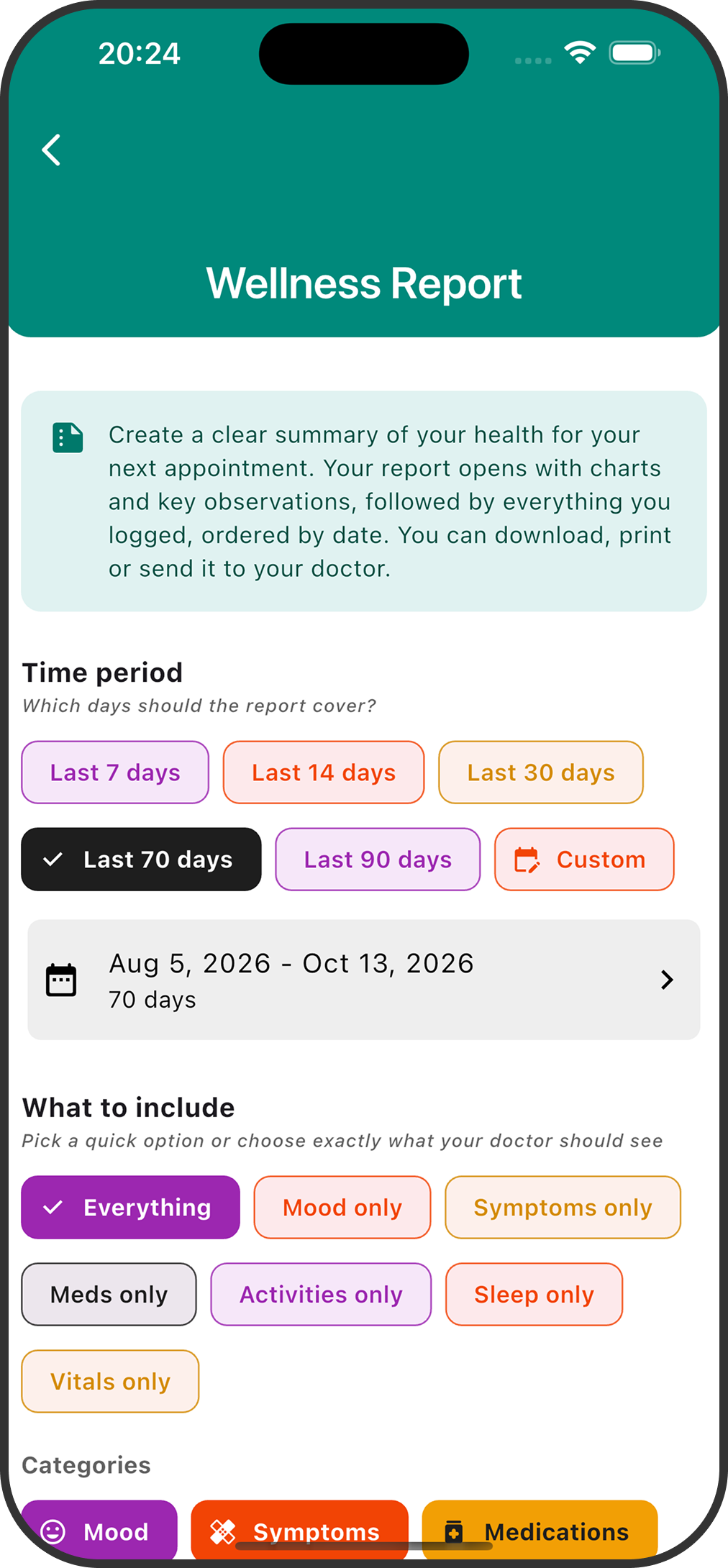
It is hard to describe a condition with so many parts. A summary of your symptoms, flares and meds over time gives your care team something concrete to work from.
If you also deal with dizziness or a racing heart, see our [dizziness and heart-rate tracking](/dizziness-heart-rate-tracking/) and [POTS](/for-pots/) pages.
Symptoms of Ehlers-Danlos syndrome: what people commonly report
Ehlers-Danlos syndrome affects everyone differently, and symptoms can come and go. These are symptoms commonly described by health organizations, and you may have only some of them:
- Unusually wide joint movement (hypermobility), which can cause dislocations and chronic pain
- Soft, velvety, stretchy or fragile skin that bruises easily
- Abnormal scarring in some types
- Heart valve problems in some types
- Other features that depend on the type, such as spinal curvature, thin corneas or muscle weakness
There are 13 types of Ehlers-Danlos syndrome (EDS) in the 2017 classification, and features differ between them. Hypermobile and classical are the most common. Only a clinician can diagnose a type.
Tired of explaining Ehlers-Danlos syndrome?Pick your symptoms and what helps, and get a card plus a link to send to family, friends or your boss. Free, no sign up.Make my cardWhat causes Ehlers-Danlos syndrome? What is known so far
Ehlers-Danlos syndromes are genetic. MedlinePlus (NIH) says variants in at least 20 genes cause them, and most affect collagen or the proteins that process it.
Some types are inherited in a dominant pattern, others in a recessive pattern, and some cases arise from new variants. For hypermobile EDS the cause is usually unknown. Genetic testing exists for several types, so ask a healthcare professional what applies to you.
Tracking can help you describe your own pattern: see best app for POTS (often seen alongside EDS) and pain and fatigue tracking.
This is general information, not medical advice. Heylixir cannot diagnose Ehlers-Danlos syndrome or tell you what is causing your symptoms. If you are worried about your health, talk to a healthcare professional. For sudden or severe symptoms, contact your local emergency services.
Sources (checked November 2026)

Log a bad EDS day with your voice
When your joints are sore, typing is hard. Say what is going on in Heylixir and your voice note logs it for you.
“Shoulder subluxed this morning, sore all over, dizzy when I stood, took my meds and rested.”
Mood: frustrated, tired
Symptoms: joint pain, dizziness, fatigue
Medication: taken, noted with the time
Journal: your words, saved as today's entry
See how voice tracking works →
Ready to track your EDS?
Try Heylixir and start logging EDS symptoms, meds and mood in seconds, even by voice.