Tracking migraine is easier when it takes seconds, so you can log attacks, aura and medication by voice on a bad day. Follow our simple guide to how to track symptoms and medications so your history stays clear. Over time, AI wellness insights can show what tends to come before attacks. Take a doctor summary to appointments, and see how migraine fits into our pain & fatigue tracking guide.
Log an attack in a few words
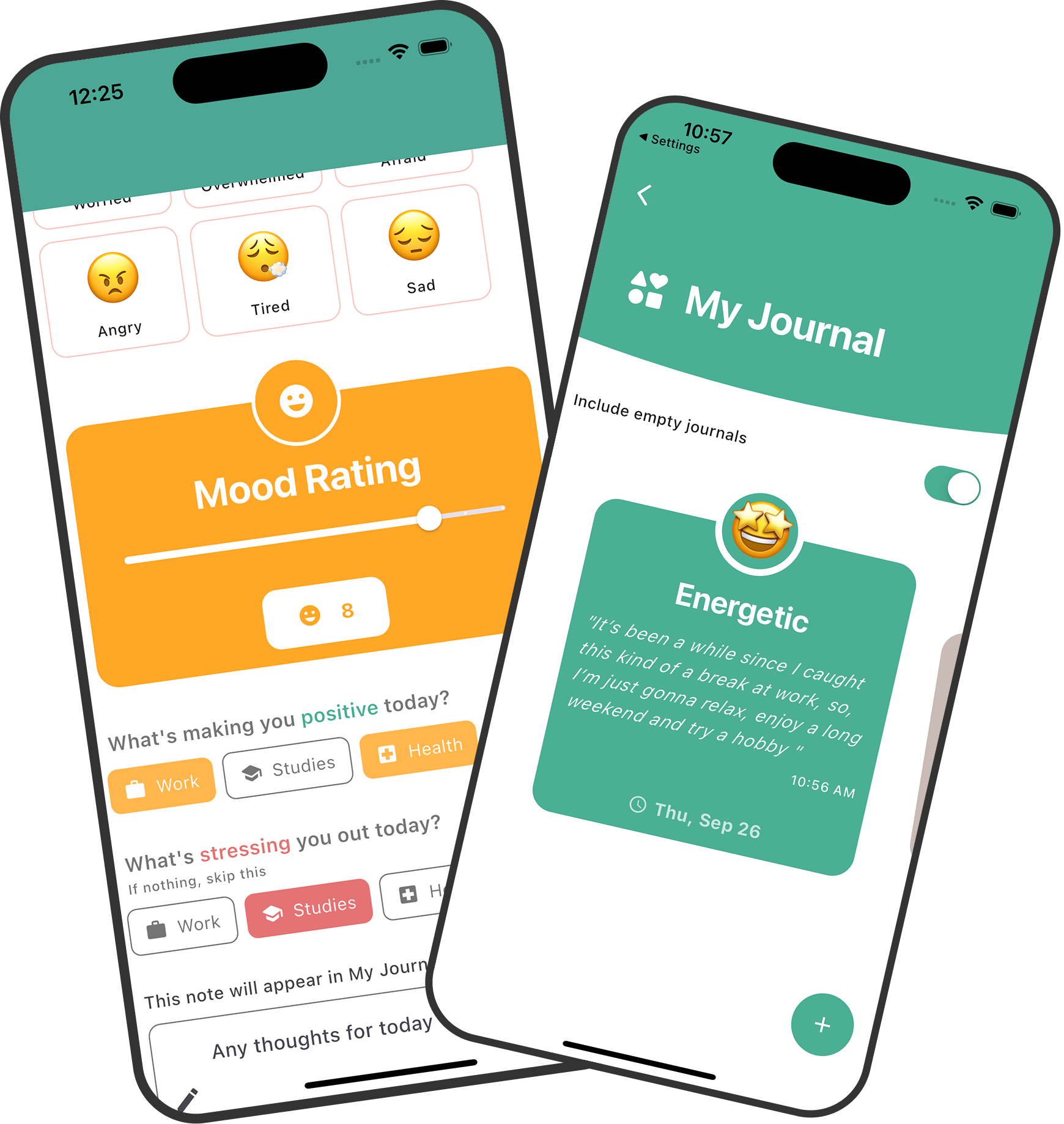
During a migraine, the last thing you want is a long form. With Heylixir you can log an attack by voice or a few taps: how bad it is, the symptoms you have, what you took and when, and what you think set it off.
Everything lands in one timeline, so you can look back at how often attacks happen, how long they last and what you did about them.
Attack intensity and symptoms with a quick note
Meds and doses with the time you took them
Log by voice when the screen is too much
Notice possible triggers across your logs
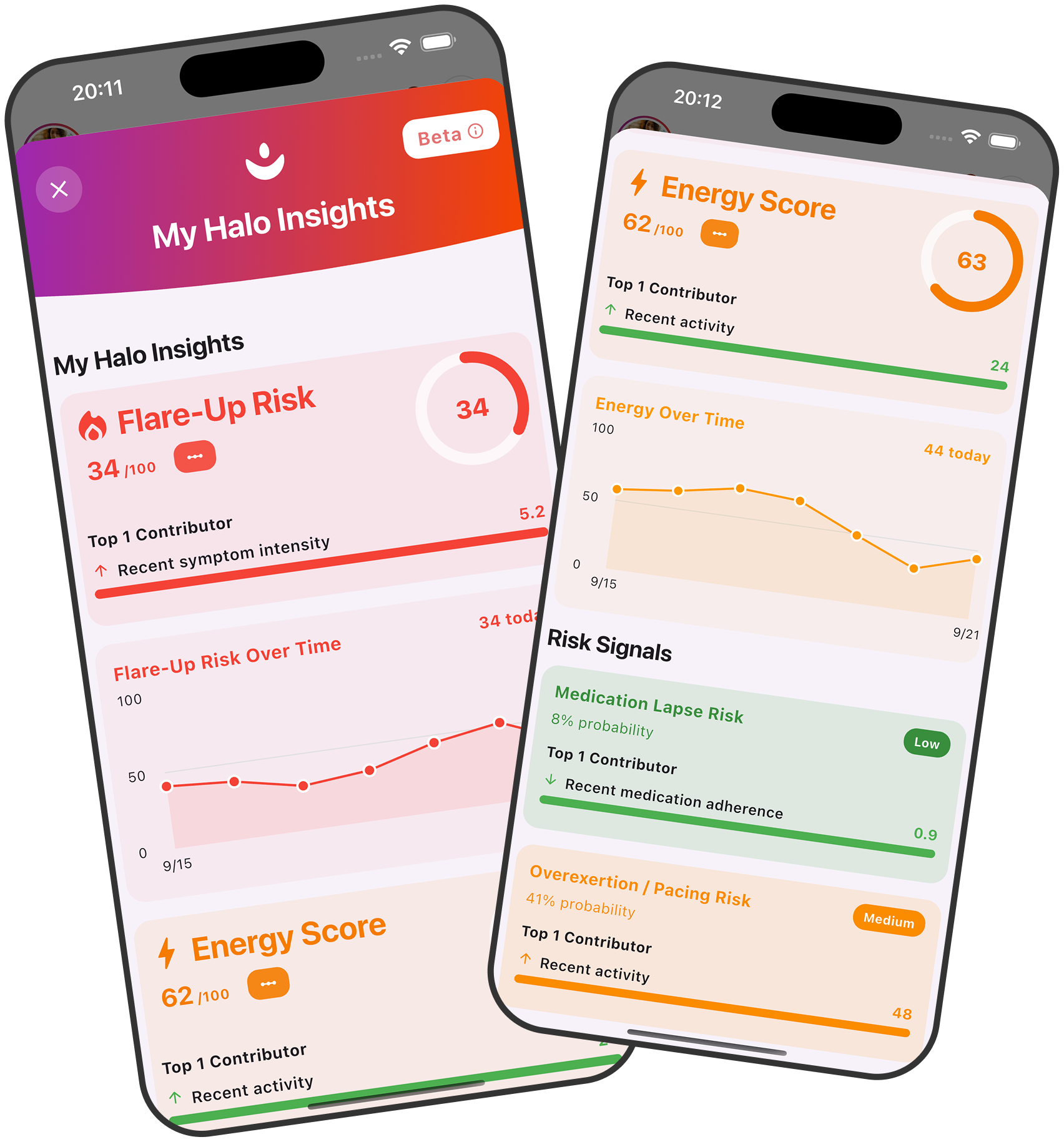
Triggers are personal and they rarely come one at a time. Sleep, stress, hormones, food, weather and screen time are common things people track. Because Heylixir keeps sleep, mood, symptoms, meds and journal in one place, you can look for what tends to come before an attack.
Halo AI helps by pointing out patterns in your own logs. These are patterns to explore, not a diagnosis or a cause, so use them as a starting point for a conversation with your healthcare provider.
Sleep before attacks
Weather, food and stress notes in your journal
Patterns across weeks, in plain language
Bring a clear picture to your appointment
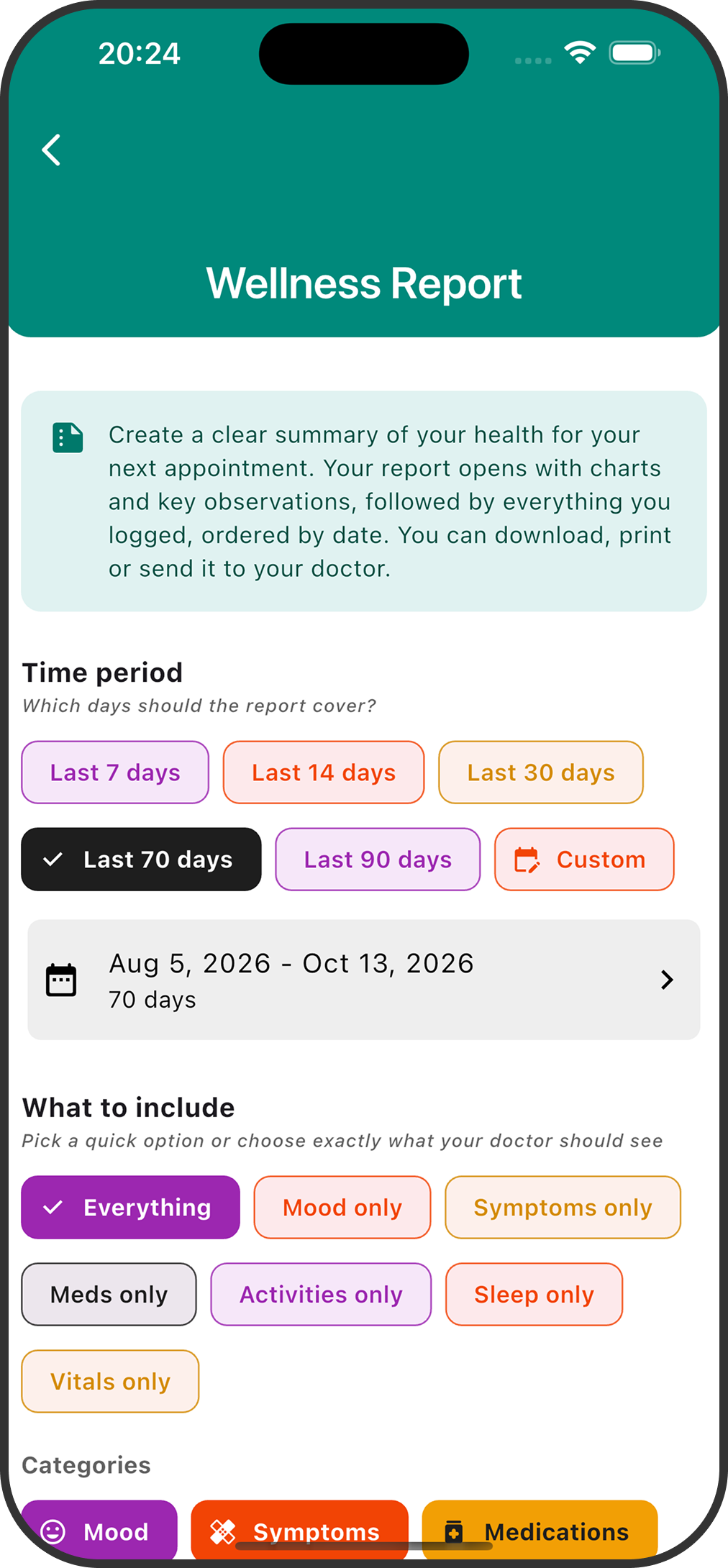
Neurologists and GPs often ask how many attacks you have had, how long they lasted and what helped. Heylixir can create a summary of how you have been doing, so you answer with dates and patterns instead of memory.
You can also set reminders for meds and check-ins so tracking stays easy and consistent.
Symptoms of migraine: what people commonly report
migraine affects everyone differently, and symptoms can come and go. These are symptoms commonly described by health organizations, and you may have only some of them:
- Recurring headaches, often moderate to severe and throbbing, usually on one side of the head
- Nausea and vomiting
- Sensitivity to light, noise and smells
- Aura in some people: vision changes such as dots or zigzags, speech trouble, tingling
- Prodrome hours to days before: food cravings, mood shifts, yawning
- Postdrome after an episode: exhaustion, confusion, dizziness
A doctor diagnoses migraine from your health history, exams and a description of your headaches. NINDS notes that imaging such as MRI or CT is not usually used to diagnose migraine, and that a headache journal can help show patterns.
Tired of explaining Migraine?Pick your symptoms and what helps, and get a card plus a link to send to family, friends or your boss. Free, no sign up.Make my cardWhat causes migraine? What is known so far
NINDS (NIH) says migraine-related head pain is linked to nerve signals, brain chemicals and blood vessels in the brain not working properly.
Common triggers include weather changes, too much or too little sleep, strong smells, bright or flashing lights, emotional stress, skipped meals, some medicines, alcohol and tobacco. Hormonal changes appear to be an important trigger and may help explain why females are affected more often. Triggers differ between people.
Tracking can help you describe your own pattern: see best app for migraine and flare-up trigger tracking.
This is general information, not medical advice. Heylixir cannot diagnose migraine or tell you what is causing your symptoms. If you are worried about your health, talk to a healthcare professional. For sudden or severe symptoms, contact your local emergency services.
Sources (checked November 2026)

Log a migraine with your voice
During an attack, a screen is hard to look at. Say what is happening in Heylixir and your voice note logs your symptoms, meds and notes for you.
“Migraine since noon, sensitive to light, feeling sick, took my meds at one.”
Mood: drained, low
Symptoms: migraine, light sensitivity, nausea
Medication: taken, noted with the time
Journal: your words, saved as today's entry
See how voice tracking works →
Ready to understand your migraines?
Try Heylixir and start logging attacks, meds and possible triggers in seconds.