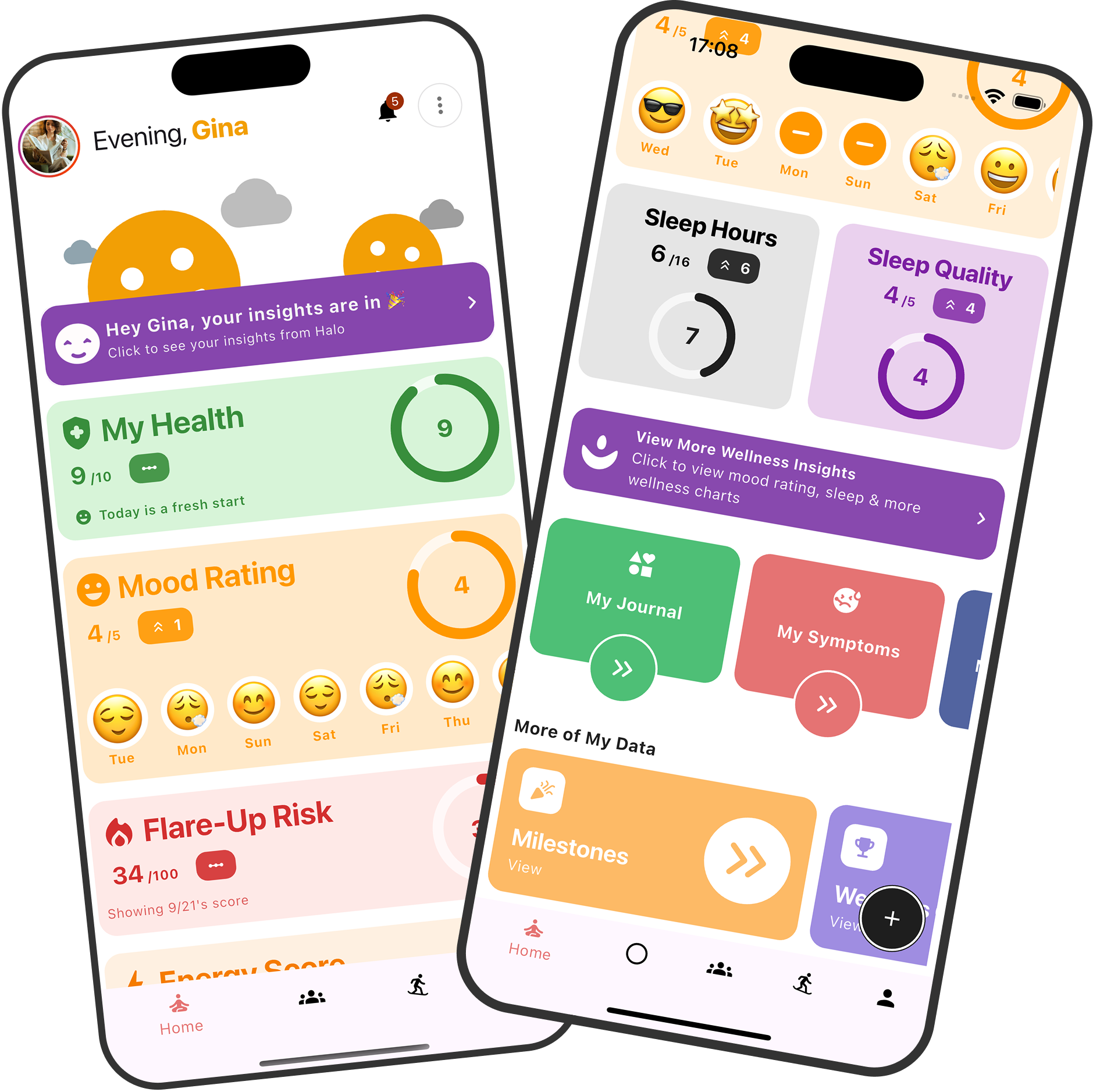
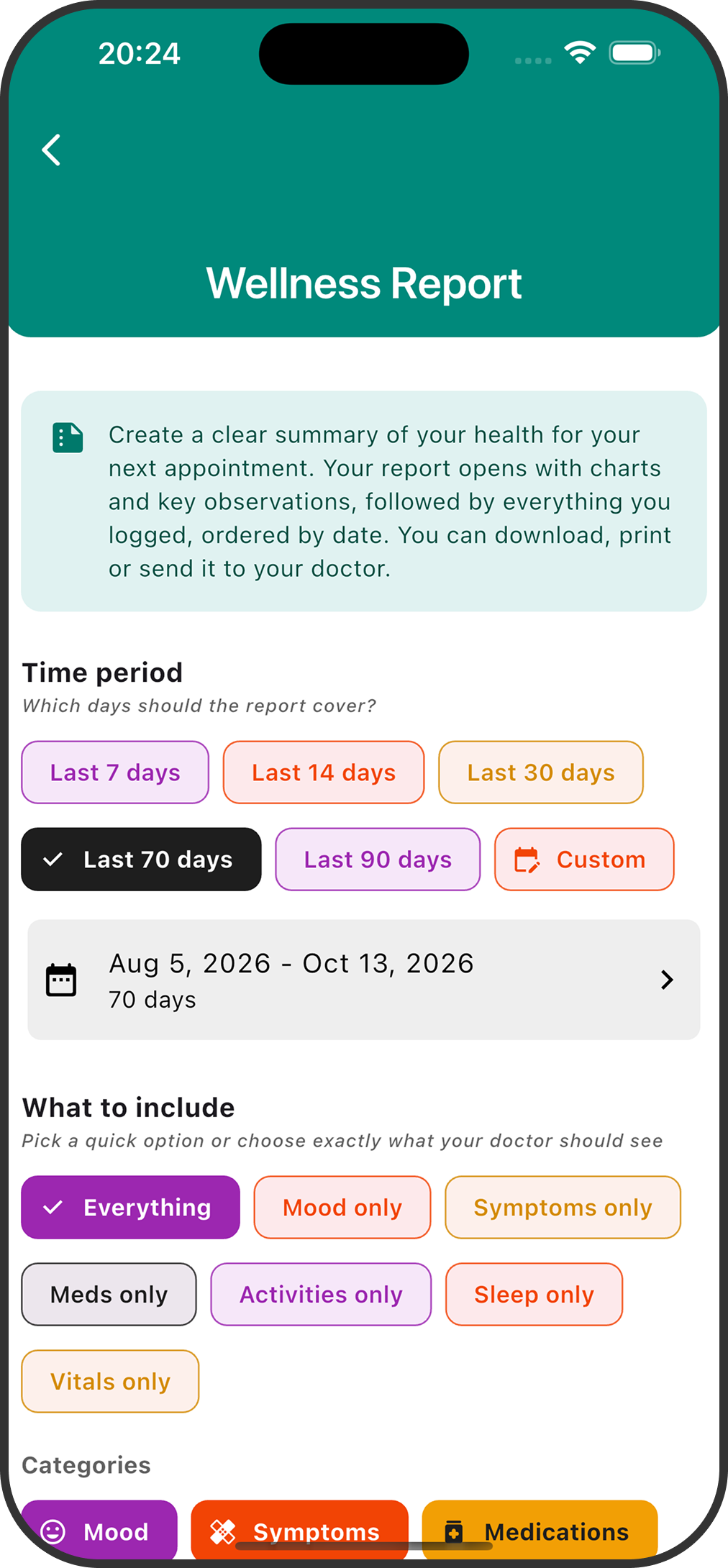
Tracking multiple sclerosis is easier when it takes seconds, so you can log fatigue, numbness and balance by voice on a bad day. Follow our simple guide to how to track symptoms and medications so your history stays clear. Over time, AI wellness insights can show what tends to come before bad days. Take a doctor summary to appointments, and see how multiple sclerosis fits into our pain & fatigue tracking guide.
Keep a record of a changing condition
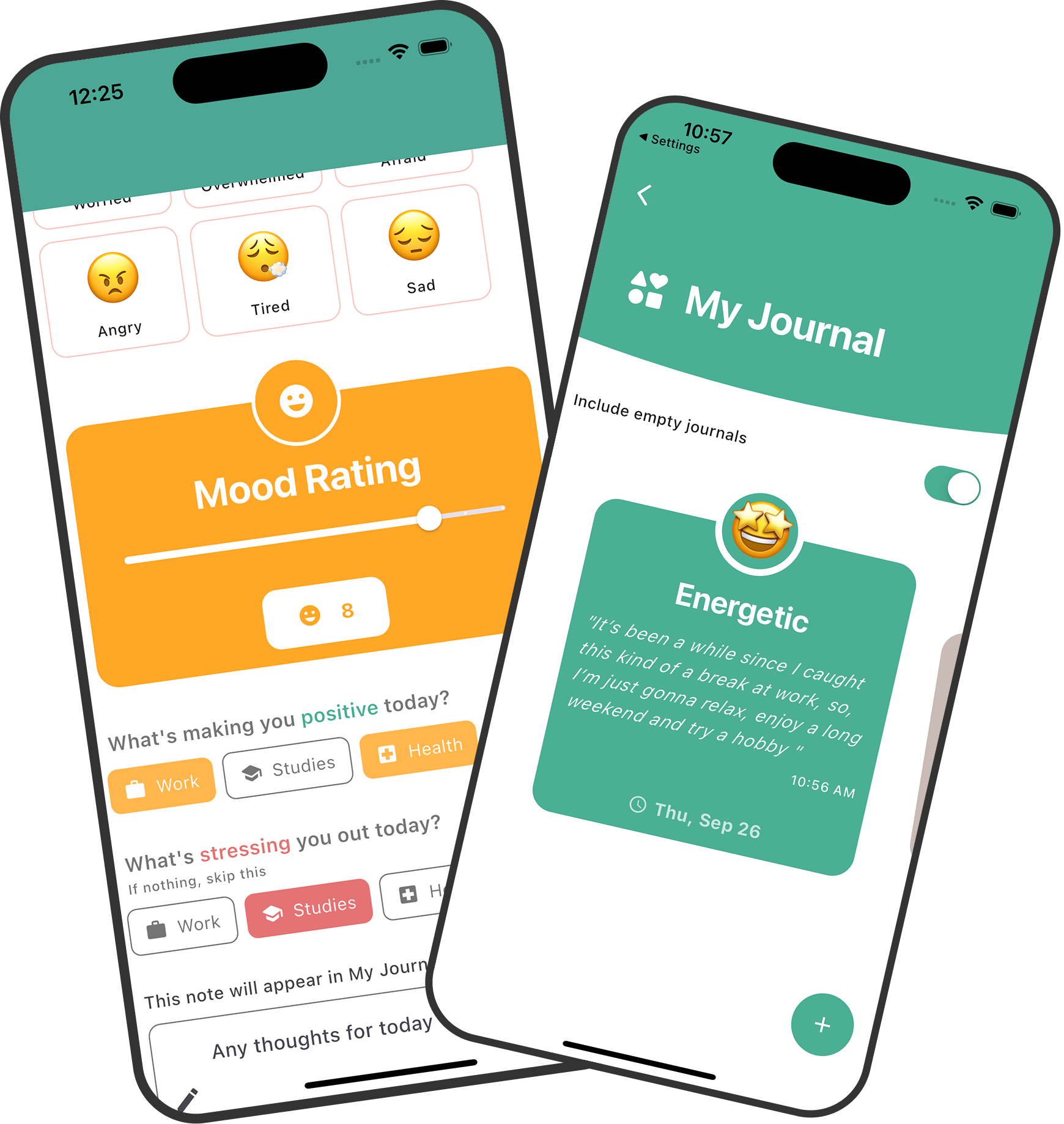
MS symptoms can shift from day to day and are hard to describe weeks later. A short log gives you and your neurologist a clearer view of what has been going on.
In Heylixir you rate each symptom, add notes and keep meds and mood in the same place, by voice or tap.
Fatigue and energy with a short note
Numbness, balance and other symptoms with intensity
Log by voice when your hands tingle
Notice what comes before a bad stretch
Heat, stress, poor sleep and illness are things many people with MS watch for. When they sit next to your symptoms, it is easier to see which ones matter for you.
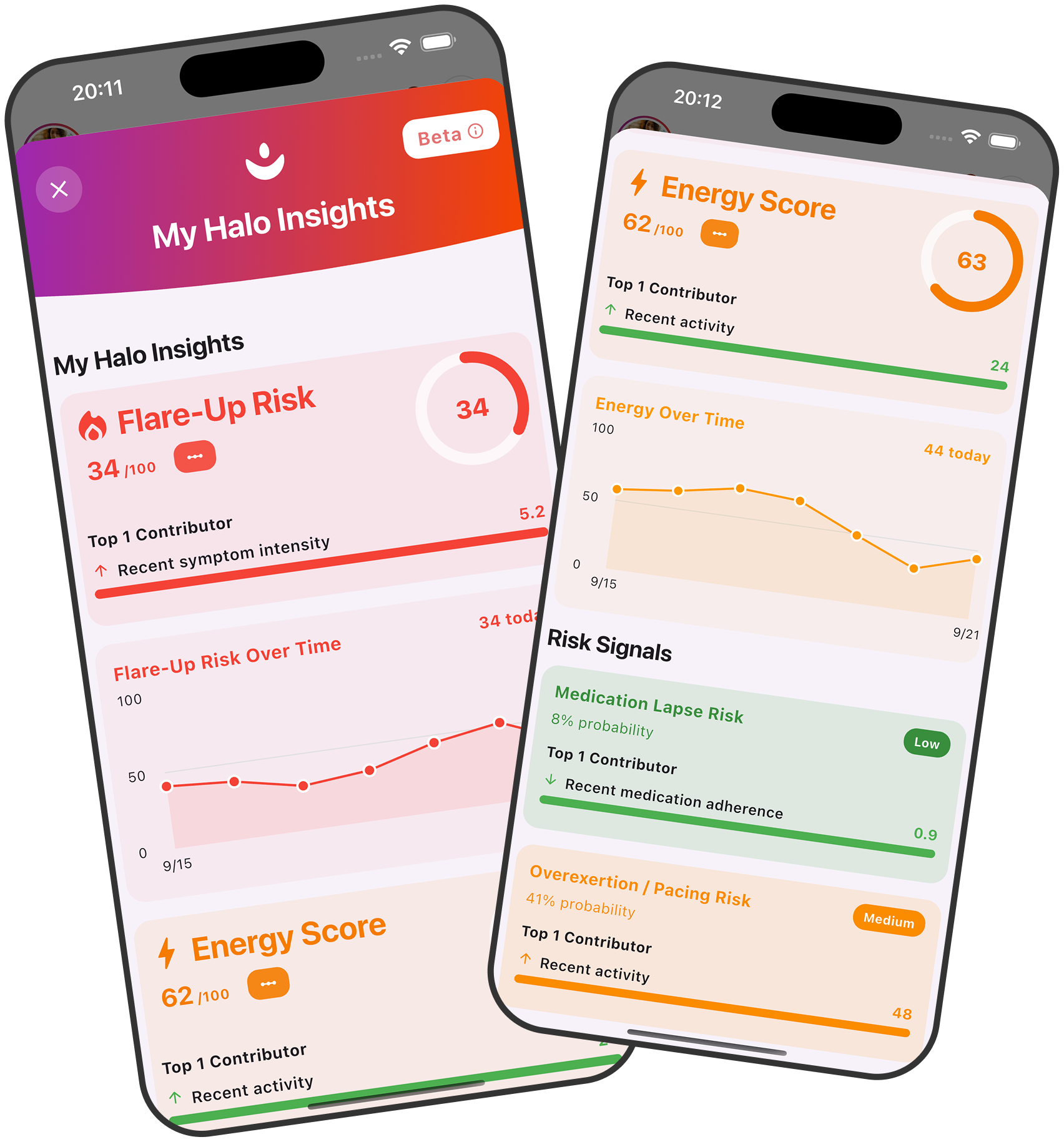
Halo AI points out patterns in your own logs in plain language. They are not a diagnosis and cannot tell you if you are having a relapse, so check with your care team about new symptoms.
Heat, sleep and stress notes next to symptoms
Meds and timing
Patterns across weeks
Symptoms of multiple sclerosis: what people commonly report
multiple sclerosis affects everyone differently, and symptoms can come and go. These are symptoms commonly described by health organizations, and you may have only some of them:
- Vision problems, including double vision and optic neuritis
- Muscle weakness, stiffness and painful spasms
- Tingling, numbness or pain in the arms, legs, trunk or face
- Clumsiness and trouble with balance when walking
- Bladder control problems and dizziness
- Physical and mental fatigue
- Mood changes, such as depression
- Trouble concentrating, learning or remembering
NINDS says no single test diagnoses multiple sclerosis (MS). Clinicians combine your history, a neurological exam, MRI of the brain and spinal cord, and sometimes other tests. Symptoms usually begin between ages 20 and 40. Only a clinician can diagnose MS.
Tired of explaining Multiple sclerosis?Pick your symptoms and what helps, and get a card plus a link to send to family, friends or your boss. Free, no sign up.Make my cardWhat causes multiple sclerosis? What is known so far
MS is an autoimmune disorder in which the immune system damages myelin, the protective coating on nerve fibers in the brain and spinal cord. The National Institute of Neurological Disorders and Stroke (NINDS) says the exact cause is not known.
Women are more likely than men to develop MS, and having a parent or sibling with MS raises risk, although MS is not directly inherited. Epstein-Barr virus is the infection most consistently linked to MS, low sun exposure and low vitamin D levels are associated with higher risk, and smoking is linked to higher risk and a more aggressive course.
Tracking can help you describe your own pattern: see pain and fatigue tracking and autoimmune symptom tracker app.
This is general information, not medical advice. Heylixir cannot diagnose multiple sclerosis or tell you what is causing your symptoms. If you are worried about your health, talk to a healthcare professional. For sudden or severe symptoms, contact your local emergency services.
Sources (checked November 2026)

Log an MS day with your voice
When your hands are numb or you are exhausted, typing is hard. Say how you feel in Heylixir and your voice note logs it.
“Very tired, tingling in my left hand, felt wobbly walking, it was hot today, took my meds.”
Mood: tired, worried
Symptoms: fatigue, tingling, balance
Medication: taken, noted with the time
Journal: your words, saved as today's entry
See how voice tracking works →
Ready to track your MS?
Try Heylixir and start logging MS symptoms, meds and mood in seconds, even by voice.